Based on the presentation delivered by Kholood Khair at the UAI General Assembly
Sudan is facing a convergence of crises—humanitarian, political, military, and existential. In her compelling address at the UAI General Assembly, Sudanese analyst Kholood Khair, Director of Confluence Advisory, offered a sharp and deeply informed account of how Sudan reached this point and what the international community continues to misunderstand.
A Revolution Interrupted
Khair traced the roots of the conflict to the 2018–2019 revolution, a national awakening that went beyond the traditional urban centres to include peripheral regions that had long suffered under neglect, exploitation, and militarisation.
The revolution was followed by a fragile civilian–military partnership that collapsed with the 2021 military coup, which:
- Restored entrenched military and economic elites
- Reinvigorated Islamist patronage networks
- Reversed Sudan’s brief re-engagement with global institutions
The war that erupted in 2023 was not an isolated event but the culmination of a counter-revolutionary project aimed at dismantling the civic forces that had challenged the old order.
Militarisation and the Breakdown of Society
The war has resulted in:
- Forced recruitment by both the Sudan Armed Forces (SAF) and the Rapid Support Forces (RSF)
- Ethnicised violence and targeted displacement
- Widespread hunger and collapse of services
- The systematic dismantling of civil society networks
Khair stressed that this is not merely a “civil war.” It is a war on civilians, designed to destroy the infrastructure of resistance committees, professional associations, women’s groups, and youth movements that powered the revolution.
The Battle for Global Opinion
A major theme of Khair’s presentation was the weaponisation of narrative.
Both SAF and RSF run sophisticated international propaganda efforts:
- SAF positions itself as the defender of national sovereignty
- RSF presents itself abroad as the anti-Islamist, technocratic, stabilising force
These narratives distort the conflict, reducing it to a binary that excludes civilians, erases the revolution, and obscures the deep structural drivers of violence.
Gulf Power Politics: A Critical Layer of the Conflict
Khair made it clear that Sudan’s war cannot be understood without acknowledging the strategic involvement of Gulf states—particularly Saudi Arabia and the UAE.
Why the Gulf is deeply invested in Sudan
Sudan’s value to Gulf powers lies in:
- Red Sea access and military positioning
- Land and agricultural projects linked to Gulf food security
- Gold trade networks, particularly those connected to RSF-linked companies
These interests make Sudan not simply a neighbour, but a geopolitical prize.
Saudi Arabia’s Influence
While Saudi Arabia publicly presents itself as a mediator—most visible through the Jeddah negotiation track—Khair highlighted that it also shapes the international frame through which Sudan is interpreted.
Riyadh’s influence results in:
- A diplomatic approach that prioritises elite-level stability over democratic transformation
- International messaging that sidelines Sudanese civilian political actors
- External pressure to favour agreements that maintain militarised political orders
Saudi Arabia’s close alignment with Western policymakers amplifies its narrative power.
The UAE’s Strategic Entanglement
The UAE, Khair noted, has longstanding ties to:
- RSF leadership
- Gold extraction and export chains
- Security contractors and logistical networks
These connections create strong incentives for Abu Dhabi to maintain influence over whichever actors can secure its economic and security interests.
Gulf Rivalries Exported Into Sudan
Although Saudi Arabia and the UAE are partners, their visions for Sudan diverge:
- Riyadh prefers a more consolidated, state-centric security arrangement
- Abu Dhabi has cultivated relationships with non-state actors, particularly the RSF
These tensions export Gulf rivalries directly into Sudanese political and military structures, often at the expense of civilian governance.
The Consequences for Sudan
Khair emphasised that Gulf influence has:
- Militarised Sudanese politics, deepening war economies
- Marginalised civilians in peace talks and international diplomacy
- Fragmented international policy, as Western actors treat Gulf states as indispensable partners in Sudan policy
In short, regional geopolitics—not Sudanese aspirations—often shape the world’s approach to the conflict.
A Call for Civilian-Centred Solidarity
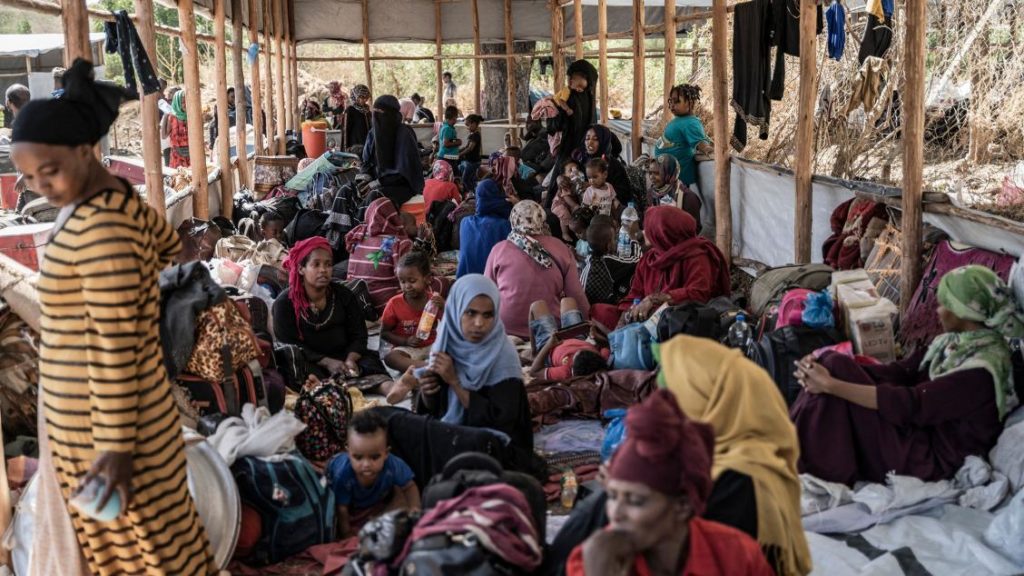
Khair closed with a sobering assessment: Sudan is experiencing the world’s largest displacement crisis, a rapidly escalating famine, and a collapse of humanitarian access. Yet only a fraction of the UN’s funding appeal has been met.
Her message to the GA was unequivocal:
Sudan needs a global solidarity movement that places civilians—not militaries and not regional powers—at the centre of diplomacy, aid, and political engagement.
Without such a shift, Sudan risks being permanently trapped between the interests of warlords and the strategies of powerful external actors.
The opinions expressed in this blog are those of the author of the presentation and do not necessarily represent the views of United Against Inhumanity (UAI).