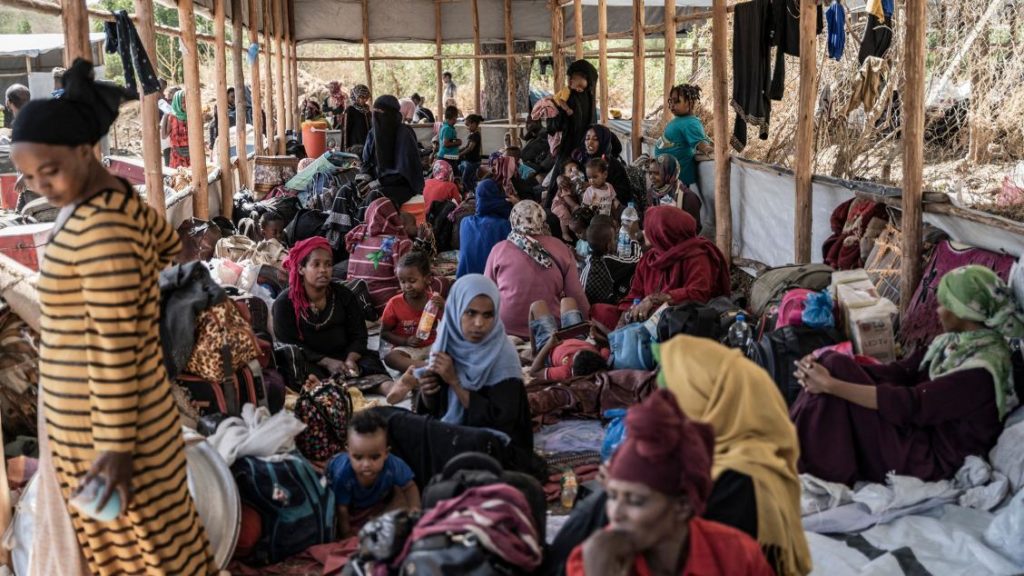
The armed conflict in Sudan has uprooted millions of people, some of whom have taken refuge in neighbouring Egypt. As this blog explains, the journey is a difficult and dangerous one, not only for those escaping from Sudan but also for those wishing to return to their homeland.
War and displacement
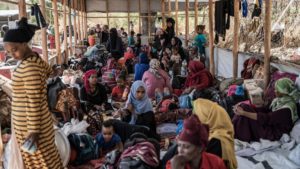
It has been two and a half years since the outbreak of the war between the Sudanese Armed Forces (SAF) and the Rapid Support Forces (RSF), a paramilitary group. During that time, over one and a half million Sudanese have crossed the border into neighbouring Egypt, with 795,000 officially registered as refugees with UNHCR.
This refugee movement has taken place despite the fact that the border between Sudan and Egypt has become almost legally impenetrable. In June 2023, Egypt all but abandoned the longstanding Four Freedoms Agreement on cross-border movements, requiring all Sudanese citizens to apply for visas before entering Egypt.
This initiative was taken against the backdrop of the EU’s establishment of a financial aid package to Egypt, to the tune of some 7.4 billion Euros, which came into effect in 2024. Part of the package was intended to fortify Egypt’s borders and to deepen cooperation with the EU on addressing the perceived threat represented by refugee movements from the Horn of Africa to Egypt and subsequently across the Mediterranean Sea.
In practice, however, Egyptian visas have been rarely issued to Sudanese citizens, especially those who lack the coveted wasta, an Arabic word meaning “connections and influence.” As a result, most of the people wishing to escape from the escalating violence in Sudan had to engage the services of human smugglers in order to make the journey through the desert to the relative safety of Egypt.
These journeys were often treacherous and traumatic. Refugees were crammed into the back of the smugglers’ pickup trucks and tied together so that they would not fall out. The trucks crossed the desert at high speed, the passengers at risk of dehydration during the heat of the day and hypothermia during the cold of the night.
To avoid being caught, the smugglers rarely stopped their vehicles, depriving refugees of the opportunity to eat or go to the toilet. Those who fell off the speeding vehicles were usually abandoned in the desert, as were those who got into arguments with the smugglers. They were then at risk of being captured by human trafficking gangs who patrolled the route to Egypt, looking for easy targets to hold for ransom.
Given these dangers, it was a major relief for the Sudanese to arrive in the southern Egyptian city of Aswan, a place where they could make phone calls to friends and relatives and make plans for the onward journey to Cairo. While many had family members and social networks in the Egyptian capital, life there brought its own hardships.
Precarious conditions in Egypt
The assistance available to refugees in Cairo has been cut as a result of reductions to the aid budgets of donor states and humanitarian organizations. Even registered refugees need valid residency permits to access public services such as housing, healthcare and education, and it can take more than a year for those permits to be renewed. As a result, many refugees are left in a precarious legal situation. To make the situation worse, police raids have become increasingly common in those parts of Cairo where refugees have congregated, with some of them being deported.
In these circumstances, it is not surprising that Sudanese refugees in Egypt have been asking themselves whether they should return to their own country. And some of them have actually done so. As reported by several media outlets, Egypt’s national railway service has been providing the refugees with free journeys from Cairo to Aswan, where they can board a bus that takes them back across the border and onward to Khartoum.
These reports have tended to emphasize how pleased the refugees are to return to Sudan, and how thankful they are to Egypt for its hospitality. But the hope and positivity expressed by some of the returnees do not tell the full story. The grim reality for most is that they are leaving Egypt because of the difficulties of life in that country. And once they have crossed the border, they are confronted with a new set of hardships in Sudan.
While some parts of the country have become less dangerous since the SAF recaptured Khartoum in March 2025, much of the country’s infrastructure has been destroyed.
Electricity is in short supply. Clean water is scarce, while rates of cholera and dengue fever are rising. The RSF has continued to fly armed drones into the capital city, while massacres are taking place in and around the city of El Fasher in the western region of Darfur.
Going back to Sudan
Having found their homes destroyed, their possessions looted and their neighbourhoods turned into military centres that are inaccessible to civilians, some of the refugees who took the train and bus back to Sudan are now moving to Egypt for a second time. A number are travelling backwards and forwards between the two countries, visiting family members who refused to leave Sudan, especially the sick and elderly, making a living by trading Sudanese goods such as coffee, spices and tobacco, or attending important events such as weddings and funerals.
Needless to say, such cross-border movements are dangerous. As well as the risk of death, injury and abandonment as a result of road accidents and breakdowns, travellers are liable to be shot by soldiers. They are also expensive. A friend who recently went to Sudan to attend a family funeral was obliged to pay the equivalent of $420 for a five-day return journey. But with regular migration routes all but closed, there is no other option.
Egypt is eager to promote the notion that the Sudanese are happily returning to their own country and successfully re-establishing their lives there. This narrative, it is hoped, will placate the Egyptian population, who increasingly believe that refugees have stolen their jobs and pushed up rental prices. It will also please the EU, which is eager to see Sudanese refugees going back to their homes. The reality, however, is that the conditions of life in both Egypt and Sudan will continue to generate treacherous cross-border movements of people.
About the author: Elena Habersky is a PhD Candidate at the University of Glasgow studying the
movement of Sudanese refugees to and from Cairo.
The opinions expressed in this blog are those of the author and do not necessarily represent the views of United Against Inhumanity (UAI).