Denmark consistently tops global rankings for happiness, equality and human rights. Yet that image coexists with a reality that has gone largely unnoticed in international public debate: over the past decade, the Scandinavian country has quietly become one of Europe’s most restrictive migration regimes. A new book published by Manchester University Press examines, with rigour and courage, how and why this transformation took place.
About the Book
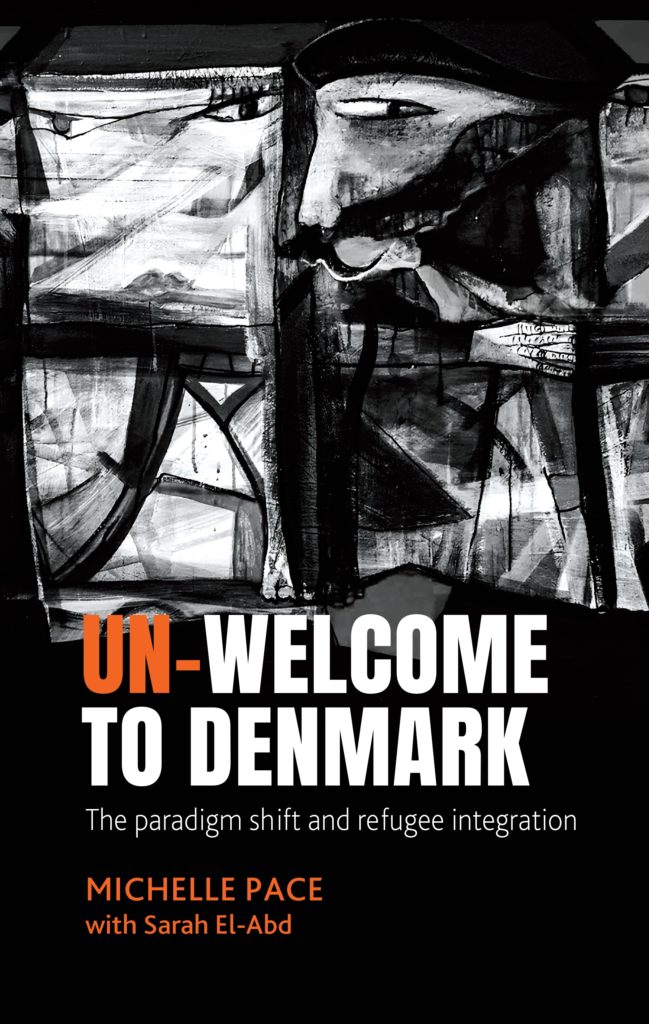
Un-welcome to Denmark: The Paradigm Shift and Refugee Integration, written by Michelle Pace with Sarah El-Abd. Manchester University Press, 2025
The Danish «paradigm shift»
In 2019, Denmark enacted what it officially called a «paradigm shift» in migration policy: refugees were no longer conceived as people who would integrate into Danish society, but as temporary guests expected to return to their countries of origin as soon as conditions allowed. For thousands of Syrians who had spent years building a life in Denmark, this meant the loss of their residency permits and the permanent threat of deportation.
Michelle Pace, Professor of Global Studies based in Roskilde, Denmark has spent more than a decade documenting this process. Together with Sarah El-Abd, she has produced a comprehensive analysis combining in-depth interviews with Syrian refugees, welfare professionals and private-sector employers, alongside a detailed examination of the Danish legislative framework from 1983 to the present day.
The theory of the «unwelcome migrant»
The book’s central concept is that of the unwelcome migrant — an analytical category that illuminates how the Danish state, through its laws, programmes and official narratives, actively produces and perpetuates the precarity of those seeking protection. This goes beyond restrictive policies: it is an institutional gaze that frames refugees as «undeserving» subjects, subjected to constant surveillance, permanent conditionality and an insecurity that pervades every aspect of their daily lives.
The book traces with precision how this gaze has been materialised in concrete instruments — from the Aliens Act to the IGU labour integration programme, through the political discourse that has normalised the language of exclusion. It also documents the experience of those working within the system — social workers, counsellors, private companies — who are forced to navigate its contradictions while attempting, in their own ways, to «repair» the harm it produces.
Why we recommend this book
Un-welcome to Denmark is far more than an analysis of a single national case. It is a first-rate contribution to current debates on welfare nationalism, the securitisation of migration, human rights and the limits of integration as conceived across Europe. At a time when many countries are debating the direction of their asylum and reception policies, this book offers a well-grounded warning and a clear map of the human consequences of the most exclusionary choices available.
Its strength also lies in the plurality of voices it brings together. Moving beyond abstract narratives about migration, Pace (with El-Abd) centres real people: Syrians describing the anxiety of living inside a bureaucratic maze with no clear way out; professionals trying to support them without being able to change the rules of the game; and employers seeking pragmatic ways to sustain their presence in the labour market.
It is, in short, a book that deliberately unsettles — and that compels us to ask what kind of society we want to build, and what human cost we are prepared to accept for our political choices.
The book is available from Manchester University Press (2025).
For more information about the author and her research, see her public profile on LinkedIn