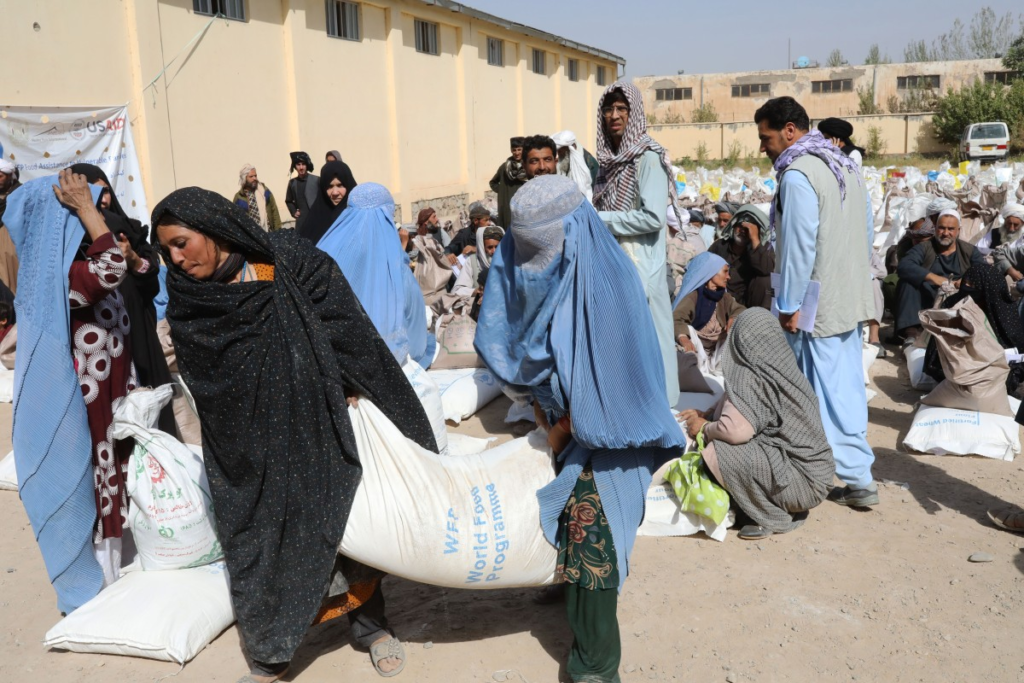
The collective punishment of the Afghan people who had no say in arrangements that have pauperized them or the conditions that contributed to the death of many, poses moral as well as political questions that have largely gone unanswered.
Following the Taliban takeover in Kabul in 2021, some US$9.5 billion of Afghanistan’s external reserves were seized by the US government. Roughly US$7 billion held in the US Federal Reserve Bank in New York, and smaller amounts held in Europe, were effectively frozen. This action triggered a long legal and political dispute over ownership and control of these assets. Under President Biden’s 2022 Executive Order 14064, US authorities split the American-held reserves into two parts: US$3.5 billion was allocated to a Swiss-based not-for-profit Foundation, the “Fund for the Afghan People” also known as the Afghan Fund in Switzerland (AFS) while the remaining US$3.5 billion was set aside for litigation claims brought by American victims of the 9/11 attacks.[1]
The freezing of Afghanistan’s central bank, Da Afghanistan Bank (DAB) reserves revived long-running litigation tied to claims by families of victims of the September 11 attacks and other terror related cases against the Taliban. Plaintiffs, in legal parlance, sought to attach, meaning to seize or take control of the DAB’s reserves held at the Federal Reserve Bank, arguing that the Taliban’s control over Afghanistan entitled a claimant in receipt of a judicial decision to pursue a legal claim against the seized reserves. Civil society organizations filed amicus briefs opposing the seizure, contending that the reserves belonged to the Afghan state and the population rather than to the Taliban as a sanctioned entity.
In a series of rulings beginning in 2022, federal courts in New York rejected attachment claims finding that DAB assets retained sovereign immunity protection under the US Foreign Sovereign Immunities Act and could not be treated as Taliban property.[2] In 2025, the US Court of Appeals for the Second Circuit upheld these decisions, confirming that private litigants could not seize the reserves to satisfy 9/11 related judgments. Although the rulings prevented confiscation of the reserves, they did not restore Afghanistan’s legitimate access to them, leaving most of the assets beyond reach or “frozen”.
While the Afghan Fund in Switzerland is accruing interest, there has been no disbursement to-date to recapitalize the DAB although the stated aim of the AFS is to “protect, preserve, and – on a targeted basis – disburse its assets for the benefit of the Afghan people”.
Critics describe the AFS as an unprecedented form of external financial control over a sovereign state’s reserves; the legal basis for administering and allocating central bank assets in this way could be challenged.[3] The creation of the AFS also signals that externally-held central bank assets may be exposed to political and legal risk during periods of geopolitical dispute. At the same time, supporters of the AFS mechanism argue that it prevents misuse by a sanctioned regime even though there is no evidence that the DAB has acted unlawfully or in a manner contrary to its statutory purpose.[4]
Efforts by UAI and others to elicit information on the AFS activities and plans have not proved productive. As of mid-June 2026, the Fund’s website had not been updated for over a year with the exception of the recent announcement of the appointment of Jonathan Greenstein of the US Treasury Department to the Board of Trustees. The general lack of AFS action and transparency raise questions about its usefulness and Switzerland’s role as an enabler of US foreign policy agendas that are tantamount to imposing collective punishment on the Afghan people. Meanwhile the AFS continues to accrue interest – presumably in the millions of US$ – while Afghans struggle to survive in desperate conditions.
The outcome of Biden’s 2022 decision is a prolonged state of paralysis in which the DAB lacks access to Afghan reserves. In addition, the creation of the AFS shows the increasingly blurred line between internationally authorized sanctions and unilateral coercive measures. Although many restrictions imposed after 2021 were presented as “sanctions” against the Taliban, the use of the reserves did not arise from a UN Security Council (UNSC) sanctions regime but rather from unilateral actions by the US and other Western governments. This distinction matters because measures lacking explicit UNSC authorization, raise questions about the legality of unilateral measures such as these.
Meanwhile, the chronic poverty and harrowing deprivation suffered by millions of Afghans, have worsened as international aid budgets continue to diminish. Humanitarian organizations have repeatedly warned that funding cuts by major donors have forced reductions in food assistance, healthcare, and nutrition programmes even as millions of Afghans face hunger, drought, displacement, and economic collapse. Child malnutrition is a major concern. Nearly 40% of infants, who were less than six months when admitted for treatment, suffered severe wasting with medical complications according to the UN in June 2026.[5]
Of course, aid reductions and sanctions-related restrictions are connected. Before 2021, external assistance made up a large share of Afghanistan’s GDP and public spending. In recent times, much needed humanitarian and other support has been slashed drastically
Financial restrictions, including the freezing of central bank reserves and limits on banking transactions, have isolated Afghanistan from global markets, restricted liquidity, and weakened private-sector confidence. Sanctions-related banking barriers have also complicated trade, disrupted remittance flows, and hindered humanitarian operations even where formal exemptions exist.
The Afghan case serves as a stark reminder that while sanctions and financial restrictions are formally aimed at governing authorities, their real effects are borne primarily by affected citizens including children born into desperate levels of poverty and deprivation.