Detention. Deportation. Eviction. Exploitation. Separation. Victimization. Criminalization. Intimidation. Frustration. Exhaustion.
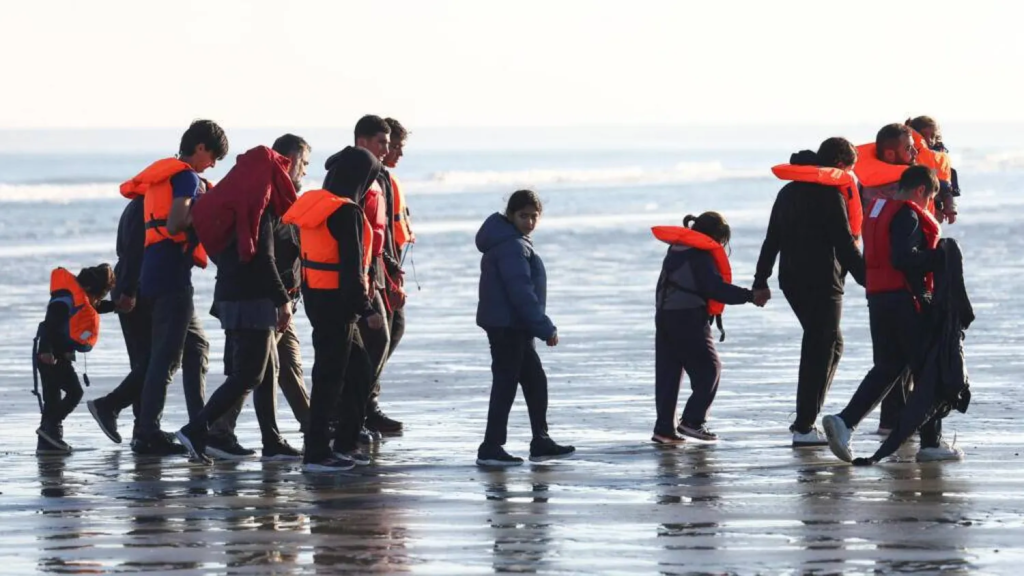
Those are all common experiences for refugees, asylum seekers and other migrants arriving and settled in Europe. And those experiences do not happen by chance. Throughout much of the continent, governments, politicians and the media have set out, in a very conscious and calculating manner, to create what a British Prime Minister infamously described as a “hostile environment” for people seeking sanctuary in the region — the most prosperous in the world and one supposedly committed to progressive values.
It does not have to be this way. Two years ago, we set out to end the inhumanity at and within Europe’s borders, issuing a statement that called on all of the region’s states to treat new arrivals from other parts of the world with dignity and respect.
Our campaign has a number of important features. It is Europe-wide, encompassing EU and non-EU states, and also stretches to contiguous regions such as North Africa, which are seriously impacted by European refugee and migration policies.
It is a decentralized campaign, involving around 160 civil society organizations across the region. It is a non-political campaign, based on the principle that all states, governments and political parties must be held to account for their actions.
The campaign has deliberately avoided a legalistic approach to refugee and migrant rights, given the number of organizations already pursuing this approach. It is non-discriminatory in nature, based on the principle that all people who are on the move, whether they are categorized as refugees, asylum seekers or migrants, deserve to be treated fairly.
Finally, while the campaign is certainly idealistic, it is not naive. We have not called for the abolition of all borders. We recognize that some of the people arriving in Europe might not have a right to remain there. And we acknowledge that there are bad actors involved in the movement of people — including corrupt government officials, smugglers, traffickers, criminal gangs and unscrupulous immigration and asylum advisors — all of whom must be brought to justice.
On the subject of naivety, we are also painfully aware of the extent to which the political environment for refugee and migrant protection in Europe has deteriorated, even in the short time that we have been preparing the Manifesto. And nowhere is this to be seen more clearly than here in the UK, where a new government started out in a very positive way — by scrapping the awful deportation deal with Rwanda — but which has since joined the populist race to the bottom in terms of the inhumane treatment of people on the move.
After two years of consultation, consideration and analysis, we are pleased to announce the publication of our Campaign Manifesto, which we are launching here today. We hope that you find it convincing, compelling and constructive. It has been written in an accessible and jargon-free style and published in multiple languages. And it is based on five key demands that we hope will be used as a basis for advocacy activities throughout the continent by our partner organizations.
First, save lives, and stop using the threat of death as a deterrent to new arrivals.
Second, humanize the reception arrangements provided to refugees and other migrants and, most particularly, stop the use of detention.
Third, end the policies of containment and externalization that encourage and oblige states elsewhere in the world to act as gatekeepers for Europe.
Fourth, establish safe routes that will enable people to arrive in Europe in a regular and orderly manner.
And fifth, enable people on the move who have been subjected to human rights violations by states to seek justice and redress.
If you look at the Manifesto, you will see that we make a number of specific recommendations under each of these headings, and we very much welcome any feedback that you wish to provide on them.
While the Campaign Manifesto seeks to challenge the harmful policies that undermine the psychosocial wellbeing and mental health of people on the move, it does make recommendations with respect to the specific interventions that can be made to address those issues. And that is what we are here to discuss today, thanks to our colleagues from the University of East London.
We regard this evening’s event as a landmark in the campaign, which we hope to develop in a number of ways.
First, we hope to build our capacity. The campaign is almost entirely run by volunteers and we have very few financial resources at our disposal. Please let us know if you wish to support our efforts, whether that be by donating some of your time or by making a financial contribution.
Second, we want to strengthen our network of signatory organizations, as some European countries are unrepresented or underrepresented. We are also eager to extend the network to areas at the periphery of Europe, North Africa being a good example, and encourage all signatories to engage in advocacy activities at the national and local levels, using the different language versions of the Manifesto as a basis.
Third, we aim to improve our dissemination and promotional endeavours. We will consider the production of additional language versions of the Manifesto.
We will try to establish better contact with individuals and institutions in Brussels, especially in the European Union. And we will encourage international organizations such as UNHCR and IOM to engage in more vigorous public advocacy on the issues highlighted in the Manifesto. Finally, we will make every effort to be more positive!
While the European refugee and migration situation is generally a gloomy one, we are aware of the fact that positive things are also happening, especially at the local and community levels. Looking to the future, we will be developing new methods of identifying and publicizing the many positive initiatives that are being taken to ensure that new and recent arrivals in Europe are treated in a respectful, dignified and humane manner.
This publication is an excerpt from Dr. Jeff Crisp’s keynote address delivered at the launch of the United Against Inhumanity Manifesto at the University of East London on 16 April 2026.
About the author: Dr. Jeff Crisp is a Visiting Fellow at the Refugee Studies Centre, University of Oxford, former Head of Policy Development and Evaluation at UNHCR, and a volunteer with United Against Inhumanity (UAI).